AI made your code faster, and made your company blinder

 art: ChatGPT + Canva
When code speeds up, context cannot disappear
Artificial Intelligence is moving beyond being a support tool for developers and taking on an active role in software engineering. Copilots and agents can already interpret requirements, draft plans, analyze systems, generate code, investigate failures, test alternatives, and propose fixes at increasingly shorter intervals.
The most visible impact of this shift is the increase in productivity. Work that used to take hours or days can now be finished in minutes, letting teams try more approaches and accelerate how fast they ship.
But that speed also creates a new gap: the faster software gets built and changed, the harder it becomes to understand the full process that led to the final result.
The code remains. The context doesn’t always.
A software change rarely comes from a single action. It might start as a requirement logged in Jira, evolve into a discussion on Slack, get analyzed in a session with an AI agent, go through different implementation hypotheses, and finally show up as a pull request in the repository.
In the end, the changed code remains. Most of the reasoning that led to it, however, can disappear.
The pull request shows which files were changed. The commit records one step of the implementation. The management tool shows the planned task. Engineering dashboards show velocity, delivery frequency, stability, and recovery time.
These pieces still matter, but on their own they don’t preserve all the intelligence used during development. They rarely explain which alternatives were considered, why one approach was discarded, what limitations were found, or how AI contributed to the result.
The problem is that context stays fragmented. The requirement may live in one tool, the discussion in another, the implementation in the repository, and the technical reasoning inside a temporary AI session. The difficulty isn’t necessarily a lack of data, but the lack of connection between the pieces.
A new economic challenge also shows up. Companies can see subscriptions, model usage, token consumption, and overall AI costs, but often can’t tie that investment back to what was delivered, what problems were solved, and how much effort was actually saved. The spend is measurable. The value, without context, remains hard to demonstrate.
AI coding observability
In this landscape, a new discipline is starting to take shape: AI coding observability.
Its purpose is to capture and preserve the layer of plans, decisions, hypotheses, alternatives, blockers, and agent interactions that normally disappears once a session ends. Instead of only observing the final result, you start to understand the path that led to it.
 art: ChatGPT + Canva
Answering these questions makes it possible to reconstruct not just the activity that took place, but the logic of the engineering process.
Without this view, decisions can be questioned without anyone knowing the original constraints. Teams can repeat approaches that were already tried and discarded. Incident investigations can end up depending only on interpreting the final code. New team members have to rediscover knowledge that already existed but was never preserved.
Why current tools don’t offer the full answer
Organizations already use different resources to manage development: project management platforms, repositories, collaboration tools, code analysis, security, operational observability, and engineering metrics.
This problem already existed in traditional development. With AI agents, though, it becomes far more relevant. An agent can analyze different paths, spot conflicts, review hypotheses, and produce a working solution in a few minutes, without leaving a permanent record of that whole process.
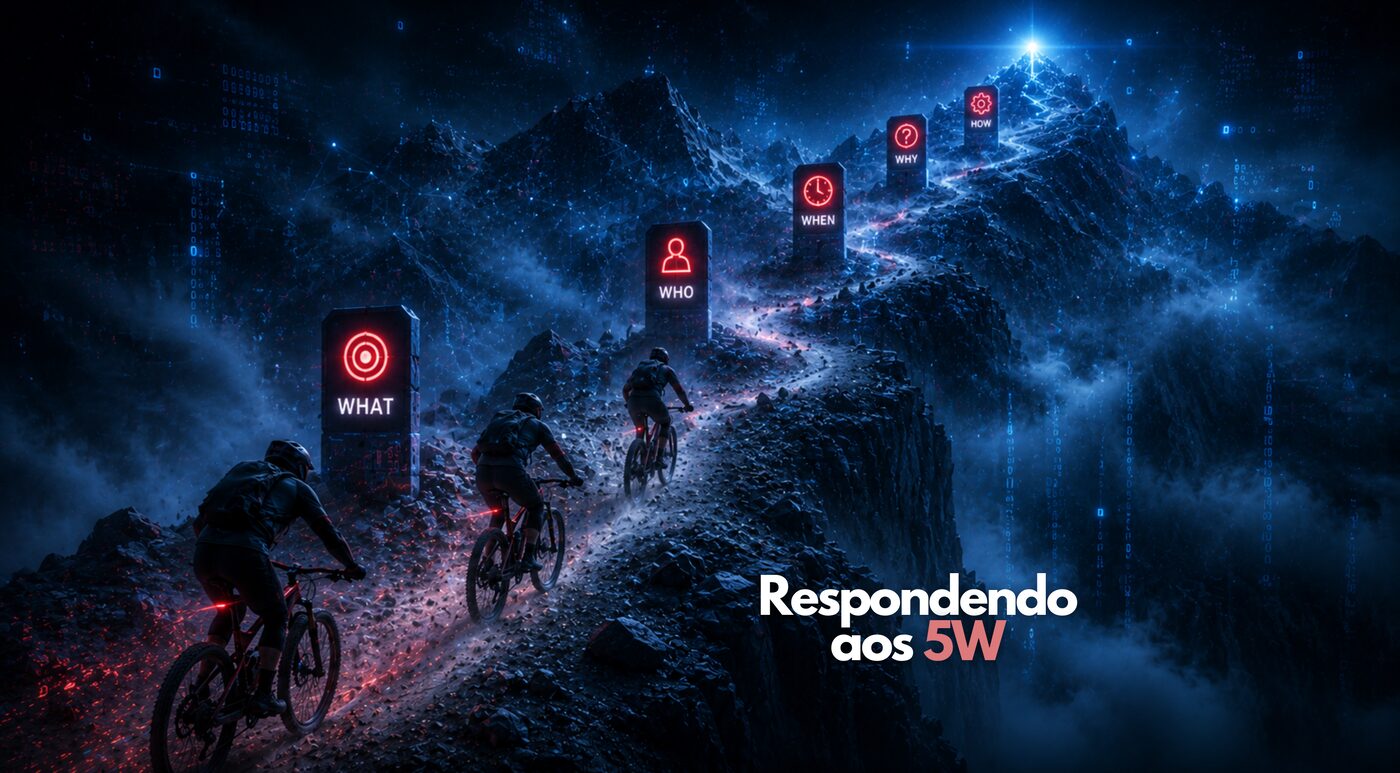
The five questions engineering needs to answer
Governing AI-assisted development takes more than tracking code, tasks, and delivery metrics. It requires the ability to answer five essential questions about every change:
What: what happened? Which feature was built, which problem was fixed, which alternatives were evaluated, and what was actually implemented?
Who: who was involved? Which people, teams, copilots, agents, and models contributed to the analysis, the decisions, and the execution?
When: when did it happen? At what point did the plans, blockers, direction changes, decisions, and results come up?
Why: why was this path chosen? Which constraints, hypotheses, trade-offs, and evidence justified the final decision?
How: how did the work evolve? What was the path between the initial problem and delivery, including attempts, fixes, investigations, and interactions between people and AI?
Turning temporary activity into institutional knowledge
AI adoption in software development will keep advancing. The question for organizations is no longer just how to use these tools to produce faster, but how to preserve visibility, traceability, and decision-making capacity as the process becomes more distributed and automated.
Solutions like Cogniscape were built to create this new layer of visibility. The platform passively captures structured events from AI-assisted development sessions and connects them with information coming from repositories, management tools, collaboration environments, and documents.
These elements get organized into a temporal knowledge graph, forming a continuous, queryable memory of engineering.
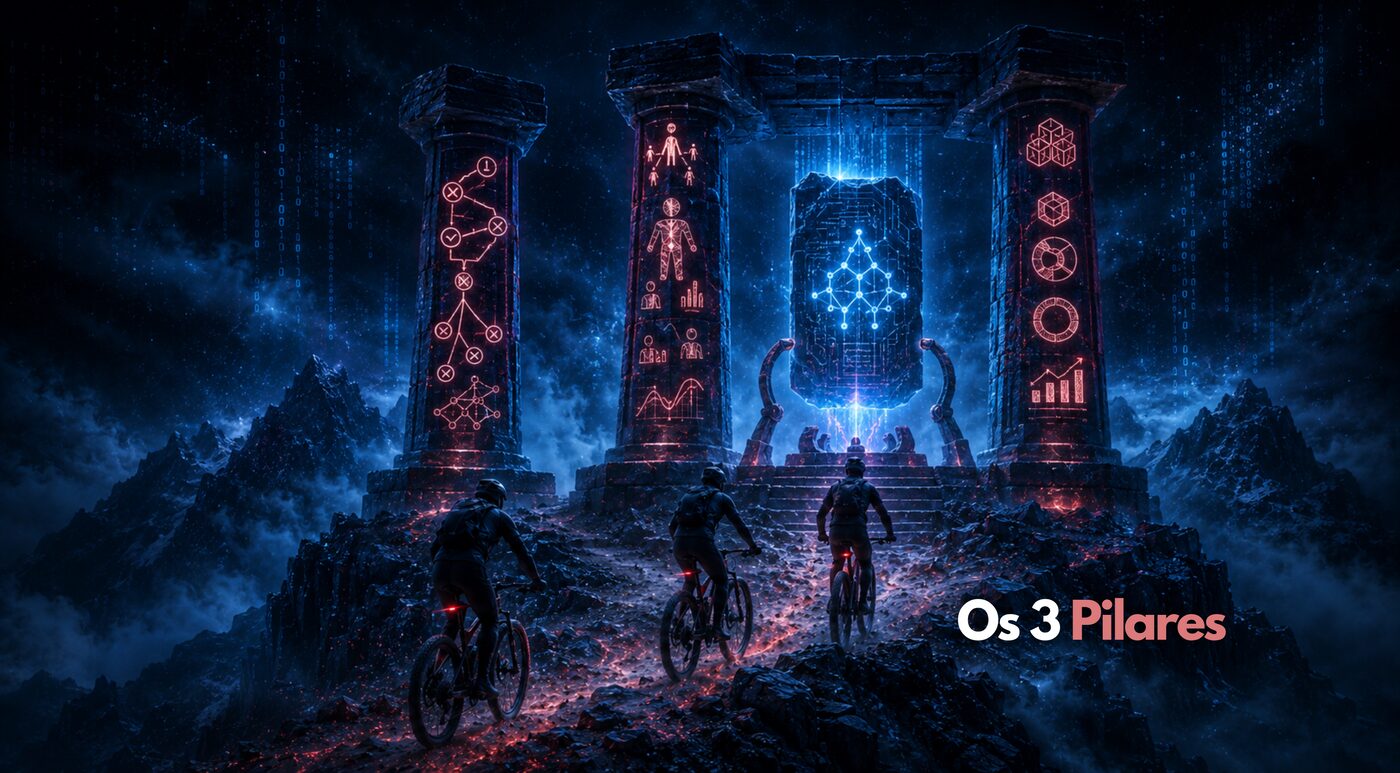
Cogniscape’s three pillars
The idea behind Cogniscape: Engineering intelligence for AI-powered teams can be understood through three complementary pillars:
1. Decisions, reasoning, and hypotheses. The first pillar preserves the why behind development: plans, decisions, hypotheses considered, paths discarded, blockers hit, and approaches actually implemented. This view makes it possible to understand why a given change was made that way, reducing reliance on people’s memory, on after-the-fact interpretation, or on reading the code in isolation.
2. Intelligence about how people and agents work. The second pillar provides visibility into how developers and AI agents work together. This includes interaction patterns, activity types, depth of investigation, behavior when hitting blockers, direction changes, and how different models participate across deliveries. The goal isn’t to evaluate people just by code volume or session count. It’s to understand the real work process, spot opportunities to improve, and support more consistent decisions about teams, methods, and tools.
3. AI investment tied to delivery. The third pillar connects model, token, agent, and cost usage to the results produced. Instead of only seeing the consolidated AI spend, the organization can analyze how much was invested in a given delivery, investigation, or fix and what value that investment helped generate. This correlation supports a more contextual view of the return on AI investment, tying costs to problems solved, deliveries made, and effort potentially avoided.
 art: ChatGPT + Canva
Code records the outcome
AI adoption in software development will keep advancing. The question for organizations is no longer just how to use these tools to produce faster, but how to preserve visibility, traceability, and decision-making capacity as the process becomes more distributed and automated.
The bigger the role agents play, the more important it becomes to understand what happened, who was involved, when each event occurred, why certain decisions were made, and how the work evolved.
In this new landscape, preserving context stops being just a documentation concern. It becomes a strategic capability for governance, organizational learning, AI investment management, and value generation.
Code records the outcome. Engineering intelligence needs to preserve the history that made it possible.
If you want to see how this works in practice, book a 30-minute briefing to see real engineering intelligence from teams in production. Or explore the Cogniscape documentation for a deeper look at event types, the temporal knowledge graph, and the open MCP.
Frequently asked questions
What is AI coding observability?
It’s the discipline of capturing and preserving the layer of plans, decisions, hypotheses, alternatives, blockers, and agent interactions that normally disappears once a development session ends.
What are the five questions engineering needs to answer?
What happened, Who was involved, When it happened, Why that path was chosen, and How the work evolved. Together they reconstruct not just the activity that took place, but the logic of the engineering process.
What are Cogniscape’s three pillars?
- Decisions, reasoning, and hypotheses; 2) Intelligence about how people and agents work; 3) AI investment tied to delivery. Together they connect the why behind each change, how people and agents work together, and how much value the AI investment is generating.